


Quick Takeaways:
Conservatories have evolved into a viable home extension alternative
There are pros and cons to each structure
Extensions are more likely to require planning permission
Conservatories are cheaper but not always the right choice
You could also consider an orangery
If you are seeking an extra living space, the choice may be between a conservatory versus an extension.
Both will give you the extra room you crave, but there are some key differences between the two that may make one more suitable for your home.
Home renovation is never cheap, so it’s essential to ensure you’ve made the right decision long before any building work commences.
In this blog, we will outline the pros and cons of each, discuss the planning involved, and answer some of your frequently asked questions, to help you decide.
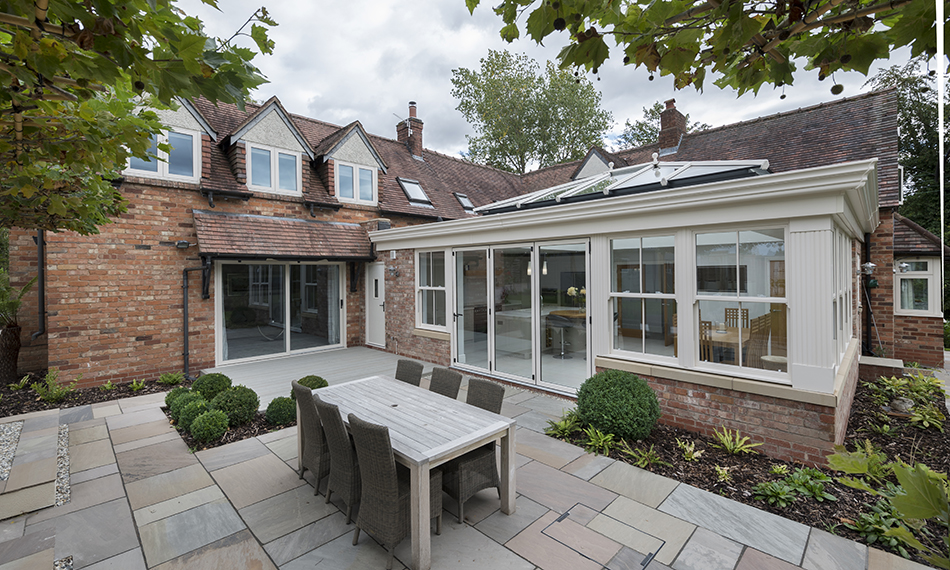
What is the Difference Between a Conservatory and an Extension?
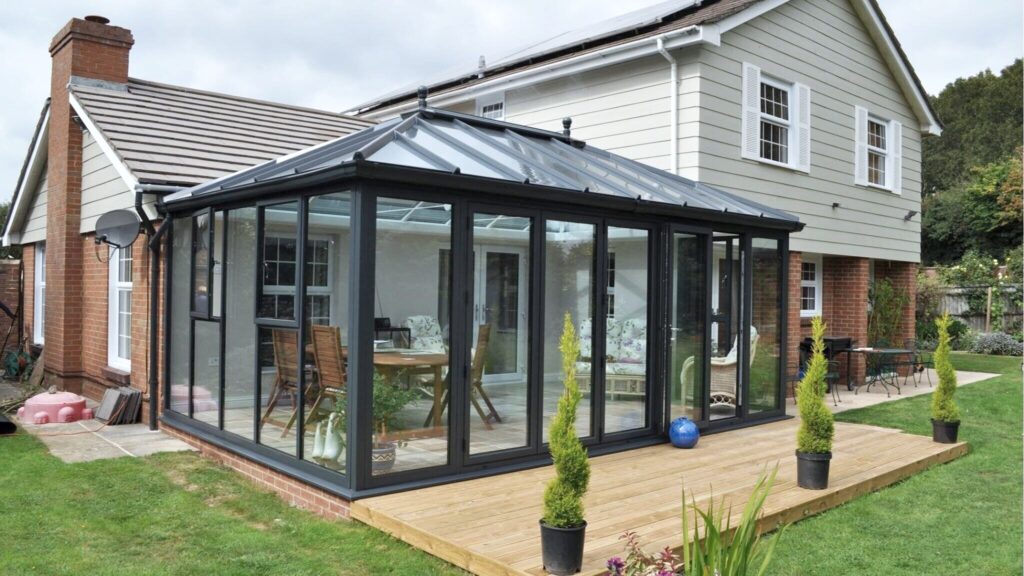
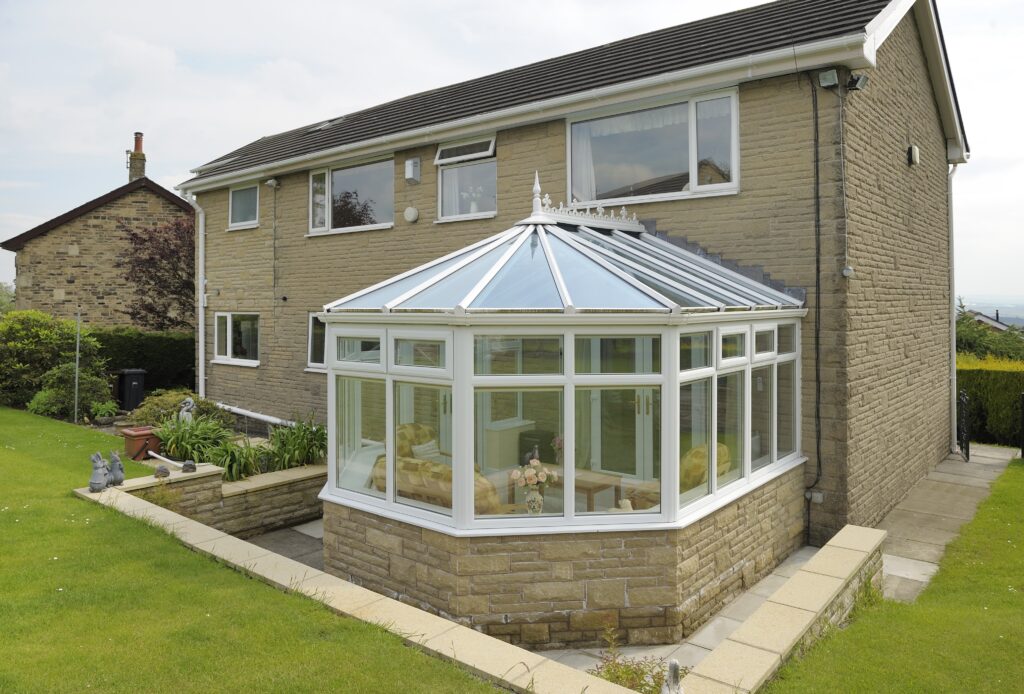
A conservatory is a type of single-storey extension, usually predominantly made from glass and linked to the main property via doors or windows, rather than directly attached. Both conservatories and traditional extensions add extra living space and, with advances in materials and technology, conservatories have changed into more substantial structures.
Once upon a time, it was much easier to distinguish between a conservatory and an extension. A conservatory operated as a sunroom, and a transition between the outside in, usually the home and the garden. Conservatories still have this function, but their design has evolved significantly over the years and their functions along with it.
For example, a conservatory could now be used as a dining room, extending from the kitchen in a similar manner to a more traditional extension.
Customisation means you can match the materials, colours and architecture of your conservatory to blend into your main property’s design, as you would with an extension.
However, there are still some key differences between a conservatory and a traditional extension, outlined below:
- Conservatories typically use far more glass
- Traditional conservatories have glass or polycarbonate roofs
- They are less insulated (though thermal insulation has improved)
- Extensions can be more than one storey, offering more flexibility
- Conservatories usually don’t require planning permission
Both offer benefits and potential drawbacks that you should carefully consider when making your decision.
Pros and Cons:
Aspect | Conservatory | Extension |
Cost | Generally cheaper | Typically more expensive |
Height | Usually single-storey | Can be two-storey |
Planning Permission | Usually simpler, often not needed | Often required |
Building Regulations | Less stringent, quicker approval | More comprehensive, longer approval process |
Usability | Seasonal (maybe too hot/cold) | Year-round comfort |
Property Value | Modest increase | Higher potential increase |
Construction Time | Shorter (weeks) | Longer (months) |
Flexibility | Limited structural flexibility | Highly customizable structure |
Insulation/Energy Efficiency | Usually lower (temperature extremes) | Better insulation and efficiency |
Aesthetics | Bright, open, garden-facing design | Integrated appearance with existing property |
Is it Cheaper to Have a Traditional Extension or a Conservatory?
A conservatory is typically much cheaper than a more substantial extension. The materials, labour and planning costs are all likely to be higher for a home extension rather than a conservatory, as illustrated in the table below.
| Cost | Conservatory | Traditional Extension |
| Average cost per square metre | £1,500 – £2,000 | £1,800 – £3,000 |
| Overall average price | £7,000 – £30-000 | £25,000 – £100,000 |
| Planning costs | Typically £0 | £200 – £300 depending on location |
| Foundation costs | Lower – simpler foundations | Higher – deeper foundations |
| Material costs | Typically cheaper glass/upvc | Higher cost, brick/roofing |
| Additional costs | Minimal | Higher due to insulation, electrics, plumbing etc |
An extension will usually add more value to your property, but you will need to wait longer until you see a return on your investment.
Because costs are lower for a conservatory, you get a quicker return on investment in terms of increased space, light and comfort.


Building Regulations & Planning Permissions
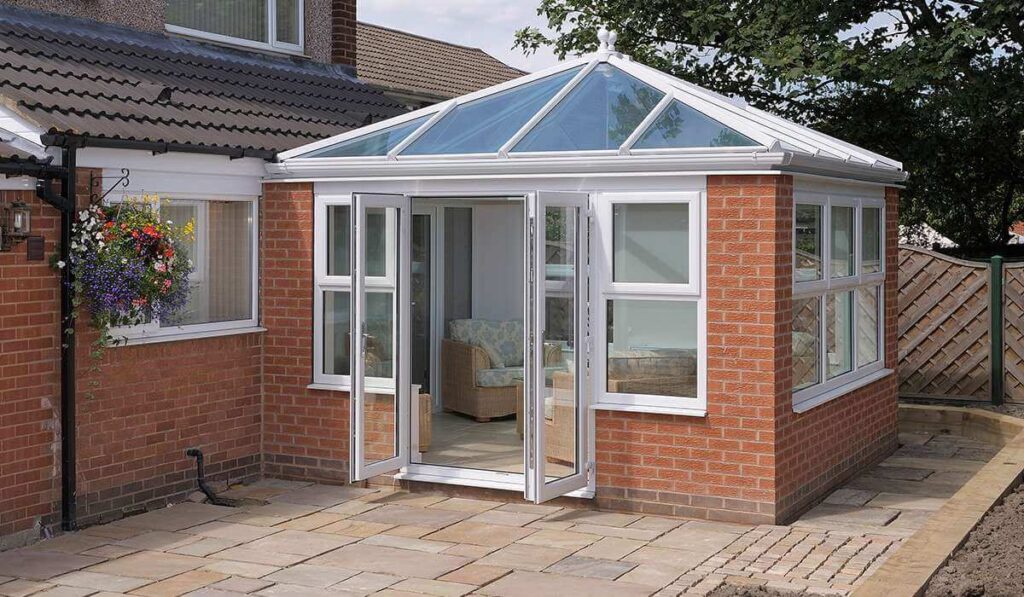
Just like any other single-storey extension, most conservatories fall under permitted development rights and don’t require planning permission.
There are exceptions to this rule, including:
- If the conservatory is not on the ground level.
- If it covers more than 30 square metres in total.
- If you live in a listed building.
- If your property is in a conservation area.
Building requirements for a conservatory include:
- It must have an independent heating system and separate temperature controls
- Glazing and electrical installations must be compliant with building regulations and requirements.
If you are planning an extension that does not fall under this criteria, you will likely need planning permission.
Here’s a quick side-by-side comparison.
Requirement | Conservatory | Extension |
Planning Permission Required | Not always (depends on size, position, and permitted development rights) | Usually required (especially if altering structure or beyond permitted development) |
Building Regulations Required | Sometimes (e.g. electricals, heating, structural changes) | Almost always required |
Typical Approval Time | Faster (often within a few weeks) | Longer (can take several months) |
Impact on Main Building | Usually separate from main structure | Integrated into main structure |
Listed Building/Conservation Area Considerations | Often simpler, but still needs checking | More likely to face restrictions and need full permissions |

Can You Turn a Conservatory into an Extension?
Yes, you can convert a conservatory into an extension, providing the footings (foundations) are strong enough to support the weight of a solid roof and walls. Doing this will save you some money, as the majority of the drainage and in-ground costs will already have been paid when you installed the conservatory. You should also not require full planning permission if you are maintaining the same size and position.
If they are not deep or wide enough, you can upgrade your foundations, but you need to make sure they can hold the extra weight.
You may be better off removing the conservatory and starting from scratch with your extension.
What About an Orangery?
An orangery is similar to a conservatory but has less glazing and more brickwork, though still less than an extension.
Composed of fortifying brick pillars and sections, alongside glazed sections and a vaulted glass roof, orangeries have a grand appearance that may be finished with bi-fold doors.
Like a conservatory, they allow natural light to flow and create an interesting transition between your home and outdoor area.
Orangeries are typically warmer than conservatories, but they are also more expensive. However, installing an orangery is still a cheaper option than a traditional extension.
We have covered the differences between orangeries and conservatories in more depth in a previous blog.
Conclusion
The choice between a conservatory and an extension will primarily depend on the factors outlined below:
- Budget
- Purpose
- Existing structure/space
- Planning permission
- Priorities
Conservatories can now be designed to blend much better with the architecture of the main property, and their thermal efficiency has improved dramatically since the old days, so it really is a question of personal preference.
We hope this blog has helped you better understand the associated pros and cons of each structure, to help you make the right choice.
If you want a quote or to discuss your options further, please don’t hesitate to get in touch.
How to Get in Touch
To request a free brochure, you can call us on 0161 976 4739, use our contact form or chat with us via the chat button at the bottom right of this website. If you live locally, you can also visit our Altrincham showroom, and check our contacts page for up-to-date opening hours.
We look forward to hearing from you!
FAQs
‘Better’ is a matter of opinion. An orangery performs a slightly different function to a conservatory and is constructed differently, so it depends on your requirements. However, orangeries are usually more expensive than conservatories, averaging £15,000 to £45,000, compared to approximately £5,000 – £25, 000 for a traditional conservatory.
A conservatory is usually considered an extension if it requires planning permission. Since most conservatories are built under permitted development rights, this would mean:
- It extended beyond the house’s original footprint.
- It is larger than permitted – extending more than 6 metres around a semi-detached or 9 metres from a detached house, at the rear.
- It is taller than the maximum height, typically 4 metres.
Conservatories take around four to twelve weeks to install, with orangeries taking a little longer at twelve to fourteen weeks. This includes planning and preparation. This is a much shorter timespan than a traditional extension, which can take several months to complete.
Bear in mind that the time it takes to build a conservatory or extension will depend on the size, access and complexity of the design.
According to research by the Nationwide Building Society, an attractive and functional extension will typically add more value to your home (up to 23%) than a conservatory (5-15%), though both can increase curb appeal and property value.
However, it depends on the quality of the installation and building work.
It is essential to use a CERTASS-certified installer, like us, to ensure a perfect fit and a professional finish.
Correctly installed contemporary conservatories should be suitable for year-round use. Modern technology, such as air-tight seals and energy-efficient glazing, have all but eliminated the problems of keeping a conservatory cool in the summer and warm in the winter. Even if it is older, there are ways to keep your conservatory warm through the winter and improve temperature control in the summer, maximising its use.